|
|
tributes & meetings about
cinema, memories
and political issues
in Rodos
Ecofilms
june '07 |
|
|

|
<%Do while rsCategories.eof=false%>
<%Call RenderMovies (rsCategories("CATEGORY"), sTableName)%>
<%rsCategories.MoveNext%>
|
Parallel
Events |
The
Ever-Evolving Documentary Marketplace:
Workshop |
|
|
Thursday, 21 June '07
17:00, Festival Office
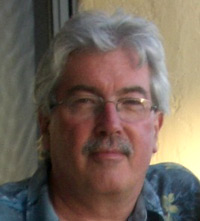
Conducted
by Jan Rofekamp
President and CEO
of Films Transit International Inc.
Head of Acquisitions
Theatrical and Home Entertainment sales
FILMS TRANSIT MONTREAL OFFICE
252 Gouin Boulevard East
Montreal, Quebec, Canada H3L 1A8
Tel: (514) 844 3358
Fax: (514) 844 7298
janrofekamp@filmstransit.com
|
|
This 3-hour workshop has the style of a
presentation that invites the audience to
participate at the end of each session prior to
breaks with a short Q&A.
At the end of the
workshop there will be an hour Q&A to address
what the participants need and want to know.
We
think that including some experiences from the
audience as well as examples we will use will
help bring sometimes rather abstract material to
life for our audience.
We will be talking about
production, sales and pre-sales, the market,
theatrical release and festivals, international
film festival strategy and the future of
documentary.
The workshop will be conducted in
English.
Jan R�fekamp
was born in Zurich, Switzerland, and grew up in
Holland, where he attended the Dutch Film
Academy. He worked in film distribution from
1972 to 1982, when he moved to Canada, where he
founded Films Transit, one of the worlds leading
international distributors of quality
documentaries.
Some of the company�s recent
releases are �The Corporation�, �Metallica: Some
Kind of Monster�, �Bukowski: Born into This�,
�Imaginary Witness: Hollywood and the
Holocaust�, �The President Versus David Hicks�,
and �The Battle for Our Minds�. Films Transit
won the Joris Ivens Award at the 2004 idfa
(Amsterdam) for �Shape of the Moon�. He has
produced and executive produced dozens of films
throughout his career.
|
|
Outline for a 3 hour workshop about the Ever-Evolving
Documentary Marketplace |
We have a style of presentation that will invite
the audience to participate at the end of each
session prior to breaks with a short Q&A, and at
the end an hour Q&A, so that all the
participants need and want to know should get
addressed. We think that including some
experiences from the audience as well as
examples we will use will help bring sometimes
rather abstract material to life for our
audience.
Subjects:
Production:
Local (home market) subjects vs those with more
universal appeal
Some films will work domestically, some
internationally.
Those made for domestic and will NOT work
internationally
Take the maximum advantage of your access: make
different versions for different markets
Research what other films have been done in the
last 10 years on the same or similar subject
Releases � include all media now known and to be
invented and adaptation rights if possible or
option for them for period of time
Clearances - of music, archive, stills, film
clips, ads, cards, and other copyrighted
material that is not owned by the filmmaker �
for doc and ancillary rights such as soundtrack
if appropriate
The most effective lengths � hour, feature,
festival lengths (versions)
No two slot lengths are the same anymore, so we
now call it generally the TV hour.
Tech notes - including on screen texts, 16-9,
4-3, HD - the far-reaching consequences for the
marketplace and the producers
The future of broadcasting: HD and non-HD
material
Sales and Pre-sales
The difference between Pre-sales and
Co-productions
The Basic Rules of Co-production
Acquisitions
Revenues
What rights can you license / sell and who buys
them?
New developments: VOD, PPV, ipod, Moby, and the
Internet. What belongs with which media? The
broadcasters?
Contracts �and is it necessary to work w a
lawyer and / or sales agent (more on this at end
of afternoon)
The market
Introduction: The life of docs: festivals,
theatrical, non-theatrical, home video,
broadcast, internet and new media.
Where docs primarily get sold / where the
majority of money is usually made for filmmakers
Broadcast still remains the primary revenue
generator
What primarily gets sold and to whom
Where to sell your projects and completed films:
Broadcast only markets (Miptv etc)
Film Festivals with market facilities, video
libraries
Emailing CE�s / Personal visits
Pitch forums: The Idfa Forum, TDF, IFP Market,
Euro Doc, Sheffield, etc
All media deals
Worldwide deals � advantages and disadvantages
Windows - when to release what media
Theatrical & Festivals
Introduction:
It seems today everyone wants to make a
theatrical doc. What are the issues?
The fact that still 95% of all docs seen by
viewers are seen on television
Basic rules: what makes a doc THEATRICAL?
International Film Festival Strategy, including:
When to send your film out: rough or fine cut or
finished films
Danger of sending films out too early
Major launch pad festivals: identify and
describe
Optimal festival policy for World Premiere,
International Premieres, European Premiere,
North American Premiere, US Premiere, National
festivals
Lengths of films festivals typically go for and
why
What is the order of events in an ideal
marketplace: an example of a launch calendar
The Future:
The old models
The NEW MEDIA and the new models
(Self-distribution possibilities)
New media: The Internet: The good & the bad
points
Future: Position of the independent filmmaker in
all of this.
END ON THE SIX BASIC RULES (JR STORY)
|
|
|
<%Loop%>
|
|

